
Recreating ‘Don’t You Want Me’
This is a fantastically detailed demo of how ‘Don’t You Want Me’ by the Human League was created using the same gear…

There are lots of FREE resources, lessons and content here to support your music technology learning.
Head over to the ‘revision‘ page to use our free topic overviews for all of the course content, along with a revision checklist for each topic.
You will also find plenty of practice short answer listening and extended response questions, complete with indicative content to show how you can answer the question.
In order to keep the site running and sustainable, there are also some courses you can purchase, along with a few teaching resources.
Use of this site is subject to our terms and conditions. Please read these before using resources or indeed paying for any content.
You should always check the most up-to-date exam requirements. This site is updated sporadically but may have elements that are out of date.
There is no obligation for anyone using the site to pay for anything; by all means just make the most of the free content which forms the majority of this site. All I’d ask is that if you find the site useful, you consider purchasing some of the longer courses. This money goes towards the overheads of keeping the site running.
This is a fantastically detailed demo of how ‘Don’t You Want Me’ by the Human League was created using the same gear…
This is a fantastic overview of the sound of gated reverb and how it works, featuring some big names in music production!
EXAM QUESTIONS
London Grammar – Hey Now (2014) This song uses a variety of different delay and reverb effects to create ambience. Evaluate: (20) Talking points: The interesting uses of delay on the guitars and drums in the introduction – can you give some parameter settings e.g. delay time / feedback / panning / filtering? Be specific…
Chris Rea: On The Beach (1985) and York: On The Beach (1997) Evaluate the production techniques used in each version of the song. Your response may consider the following production aspects: (15)
Elvis Costello: Pump It Up (1978) and Rogue Traders: Voodoo Child (2005) Compare the production techniques used in each version of the song. Your response may consider the following production aspects: (15)
Something went wrong. Please refresh the page and/or try again.

In this course you will find out about different formats consumers listen or have listened to audio on, starting with vinyl record and then focusing on tape, CD and digital audio files.

In this course you will examine the difference between recording analogue and digital signals – and the benefits / drawbacks of both. You will consider how bit depth and sample rate influence the digital signal captured as part of the sampling process, and how computers use binary code to store data. You will compare different…

In this course you will learn the importance of gain structure and how to use terms like headroom / signal to noise ratio correctly. You will look at stereo microphone techniques and consider the impact of mono compatibility on your mixes. You will look at effective microphone placement techniques and where to start in your…
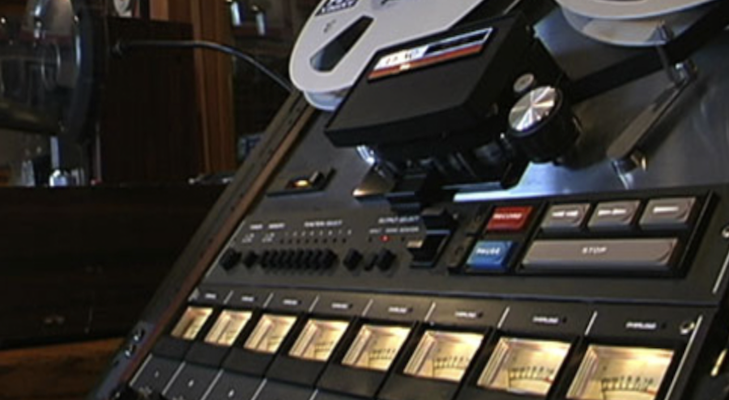
In this course you will investigate the differences between the different recording eras, starting with direct to tape mono recording from 1930-1950, moving onto early multitrack recording in the 60s, large scale analogue multitrack recording in the late 60s to the 90s, digital recording and sequencing starting in the 80s and the DAW revolution.


