
Recreating ‘Don’t You Want Me’
This is a fantastically detailed demo of how ‘Don’t You Want Me’ by the Human League was created using the same gear…

There are lots of FREE resources, lessons and content here to support your music technology learning.
Head over to the ‘revision‘ page to use our free topic overviews for all of the course content, along with a revision checklist for each topic.
You will also find plenty of practice short answer listening and extended response questions, complete with indicative content to show how you can answer the question.
In order to keep the site running and sustainable, there are also some courses you can purchase, along with a few teaching resources.
Use of this site is subject to our terms and conditions. Please read these before using resources or indeed paying for any content.
You should always check the most up-to-date exam requirements. This site is updated sporadically but may have elements that are out of date.
There is no obligation for anyone using the site to pay for anything; by all means just make the most of the free content which forms the majority of this site. All I’d ask is that if you find the site useful, you consider purchasing some of the longer courses. This money goes towards the overheads of keeping the site running.
This is a fantastically detailed demo of how ‘Don’t You Want Me’ by the Human League was created using the same gear…
This is a fantastic overview of the sound of gated reverb and how it works, featuring some big names in music production!
EXAM QUESTIONS
London Grammar – Hey Now (2014) This song uses a variety of different delay and reverb effects to create ambience. Evaluate: (20) Talking points: The interesting uses of delay on the guitars and drums in the introduction – can you give some parameter settings e.g. delay time / feedback / panning / filtering? Be specific…
Chris Rea: On The Beach (1985) and York: On The Beach (1997) Evaluate the production techniques used in each version of the song. Your response may consider the following production aspects: (15)
Elvis Costello: Pump It Up (1978) and Rogue Traders: Voodoo Child (2005) Compare the production techniques used in each version of the song. Your response may consider the following production aspects: (15)
Something went wrong. Please refresh the page and/or try again.
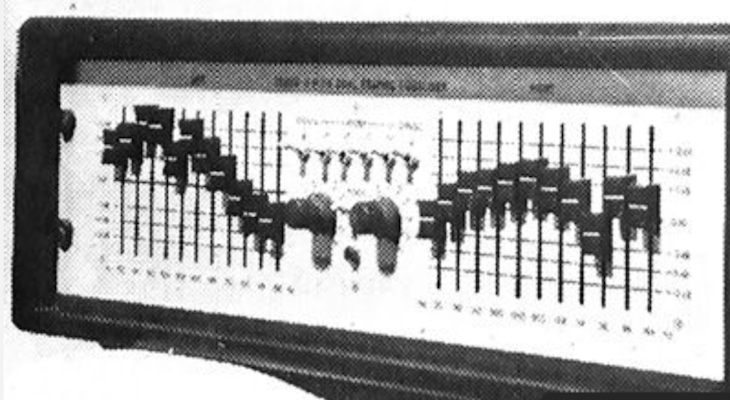
In this course you will find out what we use EQ and filtering for along with the different types of EQ processors and the parameters you can expect to see. You will also learn about specific filter types and the wider impact of EQ and filtering from corrective processes in early recording to much more…

In this course you will find out more about how compressors, limiters, noise gates and expanders control the dynamic range of music. You will find out about the impact of loudness on music and how dynamics processing has shaped music in recent years.
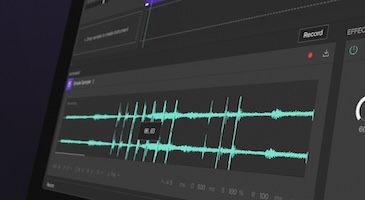
This course will give you a grounding in sampling, finding out the terminology associated with sampling audio and finding out more about how samples can be manipulated in the context of a song. It will also consider the impact of sampling and how the industry has been transformed by the use of samplers and sampler…

In this course you will discover how synthesisers work; the different modules that create and modify the sound and how control signals can be used to maintain interest. You will consider the different types of synthesiser, other instruments that work in a similar way to synthesisers and the wider impact of synthesisers on music production.


